Immigrants–How the Melting Pot Used to Work

In my recent novel, Growing Up Tough, I weave stories my father told about his childhood in a small mining town in Utah during the twenties and thirties. A key theme is the interaction of various immigrant groups who had come there to work in the coal mines. They started as Greeks, Italians, and others, but they ended up as Americans. Here is Chapter One:

Chapter 1

Eddie

Eddie giggled as he nudged the big chestnut forward. Mother stood in front of him, head up and very straight and stern, but took a tiny step backward.

“Shirley Edwin Taylor,” she said, “You come down from there this instant!”

Eddie had found the horse wandering about the alley behind their lot. Carefully he had walked up to him, speaking softly and quietly until he could stroke his neck, being careful not to look him in the eye, not to spook him. He then pushed him over next to a trash can he could climb on to, and from there slid over to his back.

He hugged his new animal friend, buried his face in his thick neck and mane, and breathed deeply. There was that good smell of life. Eddie loved life. And this horse was a wonderful living creature.

Now that wonderful living creature towered over his little mother, who was less than five feet, even when she pulled herself up as straight and tall as she could.

He laughed more loudly. “Uh uh.”

The horse took another step forward and Mother stepped back again, one hand patting the hair that strayed from where it was gathered on the top of head.

She shook her finger at him. “I mean it. You are too small to be on such a big horse. You could fall off and break your neck. Come down!”

Eddie considered her demand. He loved Mother and tried to be a good boy, but he knew her fear of horses. This was just too much fun to resist. The horse snorted, flicked its ears, and pawed the ground a little.

“Uh uh.”

Before she could stamp her feet and speak again, Father came out the back door, suppressing a smile. He strode over to the horse, reached up, and pulled the five year old down. “Come along young man. I want you to go with me. And stop teasing Mother.”

He looked at the horse, made a clicking sound, and said, “Go home.” The horse ambled away toward the alley.

He then swatted Eddie on the bottom, squeezed Mother’s arm, and said, “I’m going over to Anderson’s office to watch the strike. Taking Johnny and Junior too. We’ll be home in time for supper.”

“He deserves more than a swat for that. He could have been hurt.”

“I’ll take care of it,” Father said as he headed around the side of the house to the front yard.

Eddie’s older brothers were waiting for them. They shared the prominent nose, sharp features, and natural spunk that were typical of the Taylors.

“Follow me, boys. We’re going the back way.”

They struggled to keep up with their father, who always walked briskly. As they crossed the side streets they peeked to the south where in the distance they could glimpse Main Street. It was filled with people. Some carried signs, some stood, others milled about. There were loud voices, but Eddie could not make out what they were saying.

From Sixth Street they went east past the construction site of the new Roman Catholic Church, around the back of the Mormon Tabernacle, across the gravel play yards, behind the City Office Building, to the back entrance of the Carbon County Courthouse, a big double door beneath a portico with square pillars.

Eddie’s eyes widened. A soldier with rifle and bayonet stood guard by each pillar; they stiffened a little as the man and his sons approached. Behind them a sheriff’s deputy leaned against the door frame. He tipped his hat and waved them on, saying to the guards, “It’s okay, boys. They’re friends of Judge Anderson.”

“Hi there, Carl. ‘Come to see what happens, huh. Go on up, there’s a crowd gathering.” They hurried up the back staircase, avoiding the county staff and officials and reporters milling in the foyer to hear what was going on.

The second floor judge’s office had a large window that looked out on Main Street. About a dozen people were in the room, alternately looking out at the street or passing back and forth into the hall to the other offices. The transom window was open so they could hear the voices outside.

 Judge Anderson was older than Father, with a sprinkling of grey in his hair and cheery smile wrinkles around his eyes. He stuck out his hand and shook Father’s. “I am glad you could join us, Carl, and I see you brought your boys.”

“Yes. These are Junior, Johnny, and Shirl.”

“Call me Eddie,” piped up the youngest.

“Mind your manners! He prefers Eddie, from his middle name. I thought it would be good for them to see a little history in action. They might remember it later.”

The Judge laughed. The man next to him snorted and said, “History! Bunch of nonsense by a bunch of troublemakers. They did the same thing in ’03.”

Judge Anderson laughed again, “Carl, you probably haven’t met Fred yet; he’s County Clerk and Town Cynic. Carl just moved here from Provo.” Fred was short, shorter than Dad, thin, and quite a bit older. His skin was tanned and leathery. Anderson added, “Fred is a rancher when he’s not clerking. He has a spread out north of Castle Gate. ‘Doesn’t think much of miners.”

“Oh, nice country,” said Father. “I go out there for customers.”

“Carl is in the wholesale grocery business. He also manages the old Scowcroft warehouse over on the southside,” the Judge added. “He’s Karl Karlson’s new boss.”

“Carl and Karl. Nice to keep things simple.”

“Yeah. He’s Karl with a K. I’m Carl with a C.”

“Ah, that makes it easier.”

“My territory goes out to the Ute reservation and Roosevelt; I cover much of the eastern and northeastern parts of the state.”

“Must be a lot of travel.”

“At times. Life’s a lot easier now with telephones, when people have ’em. Unfortunately, a lot of my customers do not. I spend a lot of time in town at the warehouse too.”

Loud voices from Main Street interrupted the conversation. Eddie stretched to see.

The town of Price was platted with very wide streets, large blocks, and large lots. Main Street ran from East to West parallel to lettered strees, with crossing numbered streets from the train tracks in the west eastward. Now that large Main Street in front of the Carbon County Courthouse was filled with people for as far as Eddie could see.

Most were men in work clothes, not very clean looking, the coal dust permanently staining them. Like nearly all men in 1922 they wore hats–homburgs, bowlers, newsboy caps. No fedoras like father’s, and no cowboy hats, which was disappointing for Eddie, who had understood they were moving to Cowboy Country when they left Provo. Then again, these were mostly foreigners.

Shirts were buttoned right up to the top and had long sleeves. There were very few ties. Grown men usually wore ties, but most of these miners did not. Almost all the men had dark hair, with mustaches, and a few beards. And they all had unhappy, angry expressions. One authoritative voice rose over the others.

“I want to assure you, we are giving every consideration to each of the complaints we have received. The governor and the mine owners are meeting with leading individuals in the mining community. But nothing will be accomplished by marching around here this afternoon.”

Eddie craned his neck to see where the voice was coming from. It belonged to a man standing beneath the portico in front of the courthouse to the right of Judge Anderson’s window. He was distinguished looking, with a large round belly, and dressed in a suit with black top hat. All the officials wore top hats.

About this time the whistle blew; it was one o’clock. The whistle was at the steam laundry and blew every day at 8 am, noon, 1 pm, and 5 pm. This was convenient since it helped people keep track of time and stay on schedule. Coming now, though, it caused a stir in the crowd, startling a little at first, then just nervous shifting of weight and more milling around.

It was then that Eddie noticed the machine guns.

Thirty or more soldiers with rifles and bayonets were on either side of the portico, with more right behind the speaker. In front of the right and left pillars were machine guns secured behind sandbags, with soldiers manning them, hands on handles. They looked grim, and nervous.

Looking back to the crowd in the street, Eddie saw that most of the men had a pistol at the side or were carrying a rifle or shotgun.

“Old windbag,” muttered Fred with a scowl,nodding toward the speaker in front. “It’s all the Italians’ fault. ‘Bunch of Bolsheviks. Anarchists. They oughta just clear ’em out.”

“Well,” added Anderson, “it did start with them, but now the Greeks have joined in, which is a bit of a surprise and a disappointment to me. I didn’t think they would.”

“They’re troublemakers too. The refuse of Europe. And it’s not the miners I mind, at least not as such. It’s the blasted immigrants.” Fred thought a moment. “Well, not immigrants really. Mother’s family came over from Ireland not so long ago. It’s just this lot, they’re full of communists, want to do the same thing here they did in Russia.”

“That’s a bit of a stretch, Fred,” replied the judge.

“Listen, if they can take down a czar, they can take down a president too.”

“Getting carried away, Fred.”

Fred sighed, “Oh, I don’t know. What I do know is they started coming too fast. It takes time to turn ’em into Americans. ‘Takes time for the stuff in the pot to melt.”

“Huh?”

“You know, the ‘melting pot’. It takes time for them to not be foreigners anymore and start thinking like Americans.”

“You have a point there, Fred.”

Father asked, “What are they striking about?”

“Wages, mostly. They were cut when the price of coal fell after the war. And working conditions–they are bad, especially living conditions in the camps. They want improvements in the company houses–but I don’t see how they can be made any better without a lot more money than the companies can spare. And they want a union, the UMWA.” He looked over at Father. “Have you been in the mining camps?”

“Drove past. Didn’t see much. I don’t have many customers there.”

“The companies own it all. They rent the houses to the miners and their families and sell them everything they need at the company stores. Oh, and don’t get me wrong, there are a lot of good things about the camps–ball fields, dance halls, theaters, schools, churches. Lot’s to do to keep people happy. It’s just the homes that need improvement, especially in winter.”

“That’s where it started,” said Fred. “That guy right there.” He pointed a bony finger at a young man in the front row of the crowd just below the portico. “Frank Bonnaci. The union sent him here as an ‘organizer’. More like Italian immigrant troublemaker.”

“Well, talk is one thing,” added Anderson. “Problem is, now there have been casualties on both sides. Some Italians were wounded, and Greeks shot a company guard and a sheriff’s deputy.”

“Yes. I read about it in the paper.”

“We have several in jail, but whether they are really the culprits–who knows? No one admits anything.”

Fred’s face brightened. “Did you say your name is Taylor? Are you the son of Alfred Taylor? I knew your father. A good judge. Straight shooter.”

He looked out at the crowd again. “He would have known what to do with a mob like this. He spent most of the war chasing Quantrill in Kansas, you know.” He meant the Civil War.

“Yes, I know.” Being the son of Judge Alfred Taylor meant automatic acceptance into the social and political leadership circles of the state, at least those that were Republican. It had counted for a lot in Provo, but not so much in Price, where Democrats were the majority.

Another man ambled into the office, square jaw, straight shoulders, and sandy brown hair, about Fred’s age. He wore a fedora like father’s only a lighter shade of tan. And he wore there was a star on his shirt.

“Matt Warner,” said Anderson, “good to see you.” They exchanged pleasantries and introductions.

“Matt is a justice of the peace and deputy sheriff. He usually hears civil disputes and juvenile cases.” He cast an eye at Eddie and his brothers. “Stay out of trouble!” The boys’ eyes widened. The judge turned away to smile. “But it wouldn’t hurt to get acquainted with him in any case. He spins a great yarn.”

“Nothin’ but the truth,” insisted the deputy.

The adults turned back to politics, but Eddie kept glancing at Warner. There was something about him that was interesting. Eddie was not sure what it was. He seemed a little different from the other men in the room, jovial, yet at heart very serious, and a little sad. Eddie thought he had a rough edge to him. Finally it occurred to him that Warner reminded him of the cowboys he had seen at the movies, sort of like Fred the rancher and Town Cynic, only more so. Sort of like what’s his name in The Great Train Robbery? Tom Mix. Neat name, thought Eddie.

Warner looked at the street a few minutes and grew quiet. “Mobs give me the willies. Maybe ’cause most of the ones I’ve seen, they were after me. These fellas’ look a lot like a bunch that surrounded me in Ellensburg. Only they had ropes.”

Anderson chuckled, “I remember your telling me about that. If I remember right you talked your way out of it.”

“Yeah. I was pretty darn lucky. Problem with a mob, you cannot predict what it will do, except it’s usually nothin’ any good. It has a lot of emotion, but no brain.” He stared out the window a minute or two at the crowd milling about. “Looks like the mayor has plenty of help. I think I’ll go home.”

After he left, Anderson said quietly, “Matt is quite a character. A real cowboy. He’s a reformed bandit, you know, partner of Butch Cassidy. One of the more interesting people you will meet in our little town.”

“Aha!” thought Eddie. He was right. He looked over to where Warner had just left. Mobs had been after him–what did that mean? He looked a little harder at the crowd outside and marveled that so many people could get so upset. “A lot of emotion, but no brain”–that sounded important. Eddie tried hard to remember it.

There were only a few women, uniformly thin. Prominent cheekbones, hardly any muscle on their arms and no fat. If Eddie had known the word he would have called them gaunt.

There were only a few boys–no girls–standing close to men Eddie supposed were their fathers. One of the boys caught his eye, a boy about his age with jet black hair. The boy was staring back at him.

Growing Up Tough

A couple years ago I wrote a novel based on the stories my father used to tell about growing up in the small coal mining town of Price, Utah. This was during the 1920s and 30s and Price in those days had not quite made the transition from the Wild West to the 20th Century. Add to that Prohibition, the Great Depression, ethnic conflicts between varying immigrant groups, and the brief rise of the KKK . . . well, it was quite the time to be a young boy.

Reviews at Readers’ Favorite include these comments: “I enjoyed this read immensely and can highly recommend it. . . touching and engaging . . . crisp detail . . . personal and enthralling . . . touching upon some vital social issues still relevant today . . . (a) coming-of-age story that you can’t help but love. Highly recommended.”

Available at Amazon.

Remembering Hugh Nibley

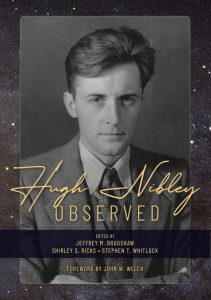
It is perhaps a bit unorthodox to review a book before receiving and reading it, but this one is so exciting, I cannot resist. Not that the contents are unfamiliar. Substantial excerpts have been posted regularly by The Interpreter Foundation in their online journal, Interpreter, A Journal of Latter-Day Saint Faith and Scholarship (https://journal.interpreterfoundation.org) and for someone who was greatly influenced by Nibley, they are a delight. Paperback and Kindle versions are available now, but I am holding out for the hardbound, due out by June.

I first became aware of Professor Hugh Nibley as a high school student, a youth who loved history, mythology, and all things ancient. His articles in The Improvement Era magazine each month were eagerly anticipated. A few years later I was a freshman at Brigham Young University trying to decide whether to continue in Archaeology or switch to something else. Wandering around in an unfamiliar building, not quite in a fugue state, I looked up and saw that I was in front of Hugh Nibley’s office!

I knocked, he answered, and I went right in, asking about his work and advice concerning what I should study, as if he would know. Walls were lined with old books and desks were covered with ancient papyri he had been working on, work which I had interrupted. He was kind and patient, not particularly talkative, no doubt thinking about something Egyptian and wondering what this silly student was doing in his room and how to get rid of him. I don’t remember what was said, but after a short visit departed, thrilled by my brief contact with greatness.

We met two or three times more over the ensuing years, usually in the company of my late wife, who as a starving student had done housework for the Nibley family. She was very fond of them and they chatted of old times and about her great grandfather, inventor of the paperback book, a point of interest to the professor, who had read some of them during the twenties and thirties. We walked across campus together, two students and an aged teacher, he with his trademark rumpled hat, trench coat, and classic leather attaché case (a souvenir of World War II, captured from a fleeing Nazi officer when the youthful Sergeant Nibley was in army intelligence).  I did not say much on those occasions, hoping he did not remember me as the freshman who had barged into his office.

As for the book in question, Hugh Nibley Observed, it is filled with recollections such as these, only much better because they are from close friends, family, and colleagues, as well as a classic autobiographical sketch by the professor himself. There are reappraisals of his many scholarly contributions, of course, but the main focus is on his personality (delightfully witty and insightful), character (determined to do what is right, no matter what), and faith (humble and unswerving).

Professor Nibley was quite possibly the most intelligent man of our time, certainly one of the most—his IQ was estimated at something over 200, on a par with Aristotle. My scheduling was such that I never actually took a class from him for credit, but have watched or listened to recordings of his Book of Mormon and Pearl of Great Price courses dozens of times, as well as other talks, so I count myself as one of the thousands of students he influenced. His delivery was rapid and articulate, reciting from memory quotations in Hebrew or Greek or Latin or Arabic or any of a half dozen other languages. He usually, not always, provided translations. I also have read nearly everything he ever published, always well written, always informative and always interesting. His collected works fill two shelves in my office and related books much of a third. Now I eagerly await the arrival of this latest volume. The bookshelves will have to be rearranged.

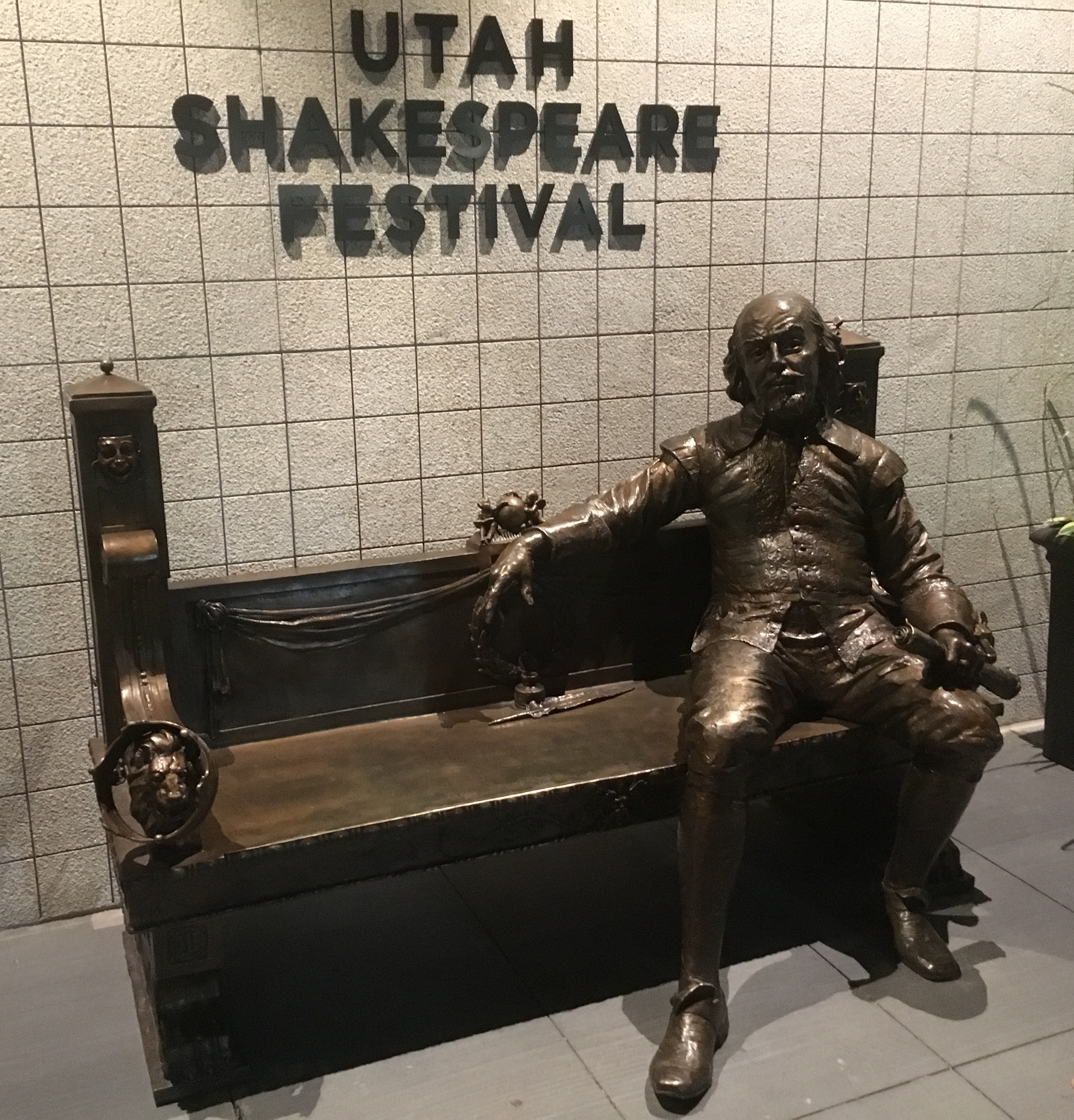
Utah Shakespeare Festival 2018

IMG_1304


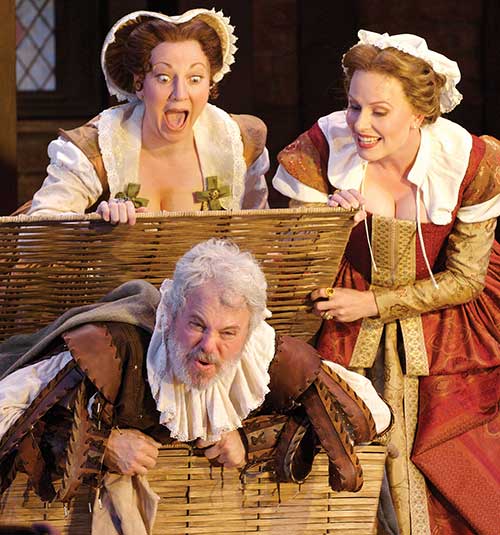
Another great season of theater in southern Utah is approaching. Offerings this year include perennial favorites The Merchant of Venice and The Merry Wives of Windsor as well as Henry VI Part One and Othello. No doubt the latter will be great; I, alas, cannot go to it. Othello for me is too tragic, Iago too evil, the pathos too deep. It is, as it were, a tear too far for me. The others, though, “Bravo!” in advance, especially The Merry Wives, a downright rollicking play.

Other offerings include Roger Miller’s Big River, a musical depiction of Huckleberry FinnThe Foreigner, about a visitor who pretends to not speak English and so overhears what he shouldn’t (reminiscent of What The Deaf Man Heard); The Liar, about a master who cannot tell the truth and a servant who cannot lie (oh, the possibilities!); An Iliad, about, well that’s obvious; and Pearl’s In The House, a musical about the great Pearl Bailey.

The award-winning Utah Shakespeare Festival is reliably excellent, so start making plans now for a week, or long weekend, of great theater starting June 28 and lasting through September 8, with an abbreviated Fall schedule from September 11 through October 13. Please visit the following site for more details and to reserve your tickets:

https://www.bard.org/

merry wifes


Best Wishes!

Rules For Writers

It is generally good for a laugh to say that a professional writer has no rules. It’s not true, of course, and a number of great writers have made lists of rules which they follow with varying degrees of faithfulness. The lists might be summed up by saying that the One Great Rule of Writing is to communicate clearly. Therein lies the rub, for communication involves much more than conveying data from one brain to another; a laundry list can do that. Writers, especially fiction writers, have a host of associations connected to those data, ranging from subtle or not so subtle implications to the deepest emotions, and conveying those is a real challenge.

Available tools for that deeper and broader communication vary with the language, which partially accounts for the difficulty of translation. English has an especially wide vocabulary and variety of idioms to aid in the task (and to confuse the foreign learner). This is reflected in differences in style and usage from one English speaking country to another, American versus British for instance, and in changes over time; the writing of Hawthorne is strikingly different from Hemingway, or even Twain, though all worked in American English. Quite different products, each well communicated.

Orwell

I recently ran across an excellent discussion of the uses and abuses of language, specifically referencing political writing, authored by none other than George Orwell, one of the best writers of the 20th century. He includes some egregious examples which may evoke great groans of laughter. A link to his essay is below, but first, his list of rules:

  1. Never use a metaphor, simile, or other figure of speech which you are used to seeing in print.
  2. Never use a long word where a short one will do.
  3. If it is possible to cut a word out, always cut it out.
  4. Never use the passive where you can use the active.
  5. Never use a foreign phrase, a scientific word, or a jargon word if you can think of an everyday English equivalent.
  6. Break any of these rules sooner than say anything outright barbarous.

Good rules. Let us pledge to follow them more fully. And here’s that link:

http://www.orwell.ru/library/essays/politics/english/e_polit/


Best Wishes!

Utah Shakespeare

The summer season of the wonderful Utah Shakespeare Festival in Cedar City is well underway, but there is plenty of time to add it to your vacation itinerary. This year’s selection includes Romeo and Juliet, As You Like It, and A Midsummer Night’s Dream, all perennial favorites. You may also enjoy Shakespeare in Love, an adaptation of the movie and a regional premier. Other regional premiers are Treasure Island and William Shakespeare’s Long Lost First Play (Abridged).

On the musical side of the house is the great Guys and Dolls, subtitled A Musical Fable of Broadway. Finally, there are two world premieres, The Tavern, a comedy by George M. Cohan adapted and directed by Joseph Hanreddy, and How to Fight Loneliness by Neil LaBute, characterized as “for mature audiences”. Two of our favorites return as directors, Brian Vaughn with Shakespeare in Love and David Ivers with How to Fight Loneliness.

missing+slider

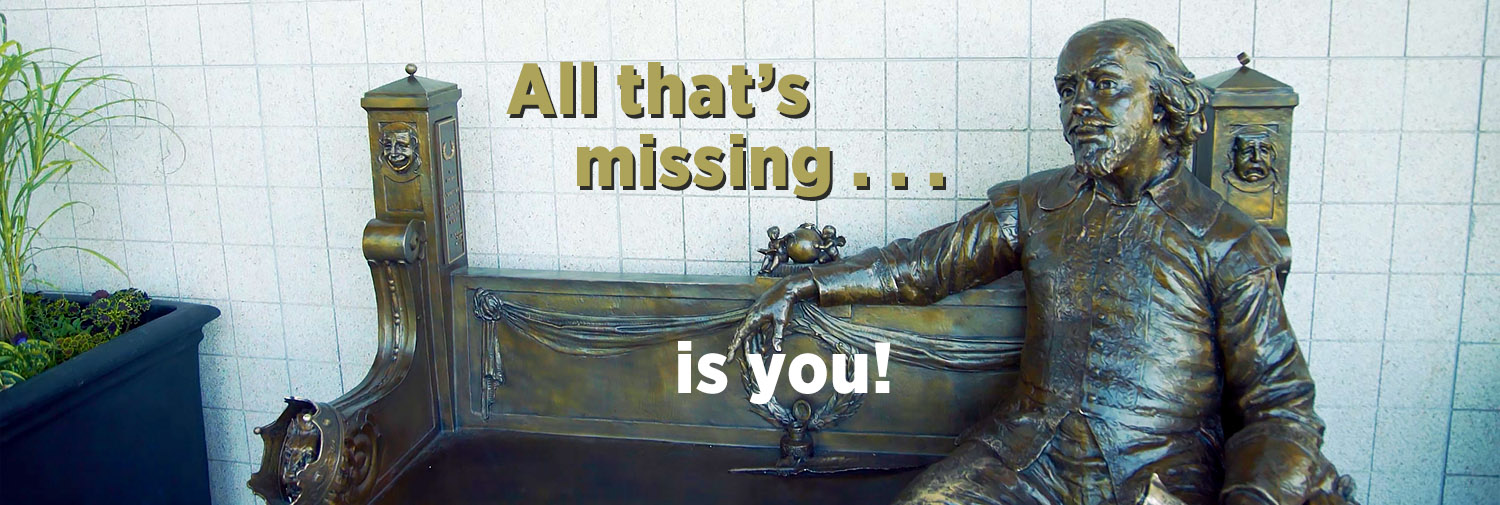
The Utah festival produces consistently excellent theater. You cannot go wrong in this beautiful mountain setting, about a 50 minute drive from St. George or three and half hours from Salt Lake City. The summer season goes through September 9th, with a shorter fall season running from September 13th through October 21st.

For schedule details and to reserve tickets, go to:

https://www.bard.org/


Also an enticing peek at next year:

2018 will see performances of The Merry Wives of Windsor and Othello, as well as Big River, a musical adaptation of Huckleberry Finn with music by Roger Miller, bound to be a delight.


Best Wishes.

What We’re Doing When We Think We’re Doing Nothing

What We’re Doing When We Think We’re Doing Nothing

Tim Miller has written a very nice, insightful discussion that relates to the overall purpose of life as a time to learn, to grow, to become more than we were before.

“As a man thinketh in his heart, so is he.”

Or to paraphrase David O. McKay, it is what you are thinking about (and I would add, doing) when nobody is watching that reveals who and what you really are (and determines what you will become).

Understanding Propaganda

The disgusting bias of the major news media in the recent election may give us pause to consider the difference between journalism and propaganda.

Those of a certain age will recall classes in school–yes, public schools–about how Nazis and Communists and other -ists manipulate their messages to mislead the masses. That was during the height of the cold war and was important so the American people could more easily discern truth from error. More recent generations have not been given such information, just as they have long since stopped hiding under desks during air-raid warnings.

In the end, all such tools, just as the -isms which use them, are means to a common end: the exercise of power by one group over another. This was one of the themes of my book, All Enlisted, and is perhaps the dominant theme of all history.

An excellent review of how journalism becomes corrupted follows:

http://thefederalist.com/2016/11/21/journalism-turns-propaganda/


A Bit of Doggerel

Writing radiology reports all day and realizing that some poor fellow out there will have to read them, one can’t help but want to simplify things. That should mean shorter, more direct and specific words as well as shorter sentences, even fragments. But linguistic habits are hard to break. I find one phrase and word particularly annoying, namely, “osseous structures” and “osseous”, meaning “bones” or “bony” respectively.


Osseous Structures


My colleagues like the Latin word osseous,

Which I think sounds too ostentateous.

It seems quite preposeous to use that word osseous;

It makes me feel downright pomposseous.


I prefer the Germanic word bony,

Which sounds to my ear much less phony.


But diction is a sensitive matter,

We all prefer to hear flatter,

Pet words fill heads hegemoniously,

And criticism’s heard acrimoniously.

So this rhyme is meant only gently,

To suggest an edit more aptly,

Suited for reading more simply.


I persuaded me, and now perhaps thee,

But how to convince all and each crony?


Best Wishes.


“All the world’s a Stage,” but some stages are better than others: Returning to Shakespeare in Utah

Lisa and I first attended the Utah Shakespeare Festival in Cedar City, Utah, in 2003 on the recommendation of a friend. (It was called The Utah Shakespearean Festival in those days. I am glad they dropped the –an, which always bothered me. I usually dropped it myself anyway.) We were pleased at the consistently high level of professional theater we found there and promptly became area representatives for the Festival, those local people who talk it up when they can and distribute brochures with schedules and so forth. We went every year for a time, but the last few years work schedules prevented us until this past week: Ah! What a delight to be back!

IMG_1300

Again for logistical reasons, our playlist consisted only of comedies this year (we skipped Julius Caesar and Henry V) namely: Murder For Two, a wonderful production consisting of only two highly talented and versatile actors, one of whom in his time plays many parts; Mary Poppins, featuring excellent music and two remarkable 9 year olds playing the Banks children, and yes, Mary does a fine job of flying; The Three Musketeers, a well condensed edition of the swashbuckling novel; The Cocoanuts, a recent revival of the hilarious Marx Brothers/Irving Berlin musical filled with sight gags and puns (Aristotle notwithstanding, they are very funny); and Much Ado About Nothing, a perennial favorite, very well done and always a joy. Though quite different, the performances were uniformly excellent.

This is the inaugural year of the new Beverly Taylor Sorenson Center for the Arts, which houses the Utah Shakespeare Festival on the edge of Southern Utah University campus. It includes the Anes Studio Theatre, an intimate venue for theater in the round and experimental productions; the Jones Theatre, equipped with all the tools any stage manager and director could desire; and the Engelstad Shakespeare Theatre, recreating the feel of the 17th century without the smells. The latter replaces the Adams Memorial Shakespeare Theater, the future of which is unclear. Dear to our hearts, we walked around the old theater and recalled the happy and inspiring times we experienced there, one of which was meeting Fred Adams, the founder of the Festival whose vision led audiences from a temporary wooden platform on the grass in 1962 to the Adams Theater in the 1970s and now to the Sorenson Center. Well done Professor Adams!

IMG_1302

One regret. We missed seeing The Odd Couple, a Neil Simon play starring two of our favorites, David Ivers and Brian Vaughn. It will run September 14-October 22. They are artistic directors now, but we first saw them as actors in 2003 when both played in Much Ado About Nothing. We were immediately taken with their talent. In The Odd Couple they will alternate between the roles of sloppy Oscar and neat Felix, one night playing one, the next night the other. Hmm. Perhaps we will have to find a way to make a run to Cedar in the Fall. For at least two nights.

This is the 400th anniversary of cousin Will’s death. We are grateful his spiritual descendants are alive and well. For more information on the Utah Shakespeare Festival, go to http://www.bard.org/


Best Wishes.

IMG_1304