A couple years ago I wrote a novel based on the stories my father used to tell about growing up in the small coal mining town of Price, Utah. This was during the 1920s and 30s and Price in those days had not quite made the transition from the Wild West to the 20th Century. Add to that Prohibition, the Great Depression, ethnic conflicts between varying immigrant groups, and the brief rise of the KKK . . . well, it was quite the time to be a young boy.
Reviews at Readers’ Favorite include these comments: “I enjoyed this read immensely and can highly recommend it. . . touching and engaging . . . crisp detail . . . personal and enthralling . . . touching upon some vital social issues still relevant today . . . (a) coming-of-age story that you can’t help but love. Highly recommended.”
The folks at “Scripture Central” have put together a remarkable video recreation of what the Garden of Gethsemane looked like at the time of Christ, based on archaeological research and discoveries of the past decades. It is well worth watching. I testify the Jesus is indeed the Christ, the risen Lord, our beloved Saviour.
If anyone is in Danville, Indiana, on June 21st, I will be signing books at The Authors’ Patch, a bookstore just across from the county courthouse. Their website is booksbycovalt.com and their Facebook page is The Authors’ Patch Bookstore. I am particularly interested in promoting my most recent book, Growing Up Tough, a fictional version of stories my father told about life as a kid during the Great Depression.
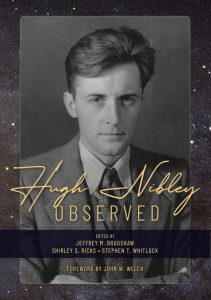
It is perhaps a bit unorthodox to review a book before receiving and reading it, but this one is so exciting, I cannot resist. Not that the contents are unfamiliar. Substantial excerpts have been posted regularly by The Interpreter Foundation in their online journal, Interpreter, A Journal of Latter-Day Saint Faith and Scholarship (https://journal.interpreterfoundation.org) and for someone who was greatly influenced by Nibley, they are a delight. Paperback and Kindle versions are available now, but I am holding out for the hardbound, due out by June.
I first became aware of Professor Hugh Nibley as a high school student, a youth who loved history, mythology, and all things ancient. His articles in The Improvement Era magazine each month were eagerly anticipated. A few years later I was a freshman at Brigham Young University trying to decide whether to continue in Archaeology or switch to something else. Wandering around in an unfamiliar building, not quite in a fugue state, I looked up and saw that I was in front of Hugh Nibley’s office!
I knocked, he answered, and I went right in, asking about his work and advice concerning what I should study, as if he would know. Walls were lined with old books and desks were covered with ancient papyri he had been working on, work which I had interrupted. He was kind and patient, not particularly talkative, no doubt thinking about something Egyptian and wondering what this silly student was doing in his room and how to get rid of him. I don’t remember what was said, but after a short visit departed, thrilled by my brief contact with greatness.
We met two or three times more over the ensuing years, usually in the company of my late wife, who as a starving student had done housework for the Nibley family. She was very fond of them and they chatted of old times and about her great grandfather, inventor of the paperback book, a point of interest to the professor, who had read some of them during the twenties and thirties. We walked across campus together, two students and an aged teacher, he with his trademark rumpled hat, trench coat, and classic leather attaché case (a souvenir of World War II, captured from a fleeing Nazi officer when the youthful Sergeant Nibley was in army intelligence). I did not say much on those occasions, hoping he did not remember me as the freshman who had barged into his office.
As for the book in question, Hugh Nibley Observed, it is filled with recollections such as these, only much better because they are from close friends, family, and colleagues, as well as a classic autobiographical sketch by the professor himself. There are reappraisals of his many scholarly contributions, of course, but the main focus is on his personality (delightfully witty and insightful), character (determined to do what is right, no matter what), and faith (humble and unswerving).
Professor Nibley was quite possibly the most intelligent man of our time, certainly one of the most—his IQ was estimated at something over 200, on a par with Aristotle. My scheduling was such that I never actually took a class from him for credit, but have watched or listened to recordings of his Book of Mormon and Pearl of Great Price courses dozens of times, as well as other talks, so I count myself as one of the thousands of students he influenced. His delivery was rapid and articulate, reciting from memory quotations in Hebrew or Greek or Latin or Arabic or any of a half dozen other languages. He usually, not always, provided translations. I also have read nearly everything he ever published, always well written, always informative and always interesting. His collected works fill two shelves in my office and related books much of a third. Now I eagerly await the arrival of this latest volume. The bookshelves will have to be rearranged.
Lisa and I recently had the pleasure of visiting our son and daughter-in-law in Germany and seeing our new twin grandsons. That, of course, more than justified the trip and ranks as one of the great experiences of life, but we also made a side trip, a sentimental journey really, to Salzburg, Austria, where I served a portion of my mission fifty years ago, described in my memoir, All Enlisted. It is still the most beautiful city in the world–more of that in a future post!
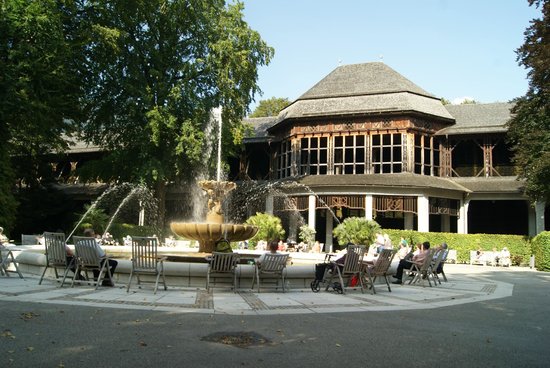
The Kurgarten in Bad Reichenhall
A short train or bus ride over the border into the Bavarian alps lies the small, picturesque health resort of Bad Reichenhall. We did not have time to search out the actual place where I used to live, but we did stroll around the garden and spontaneously attend an afternoon concert, not noticing at first that the trio we bought tickets for was an unusual one: violin, cello, and banjo. Banjo?
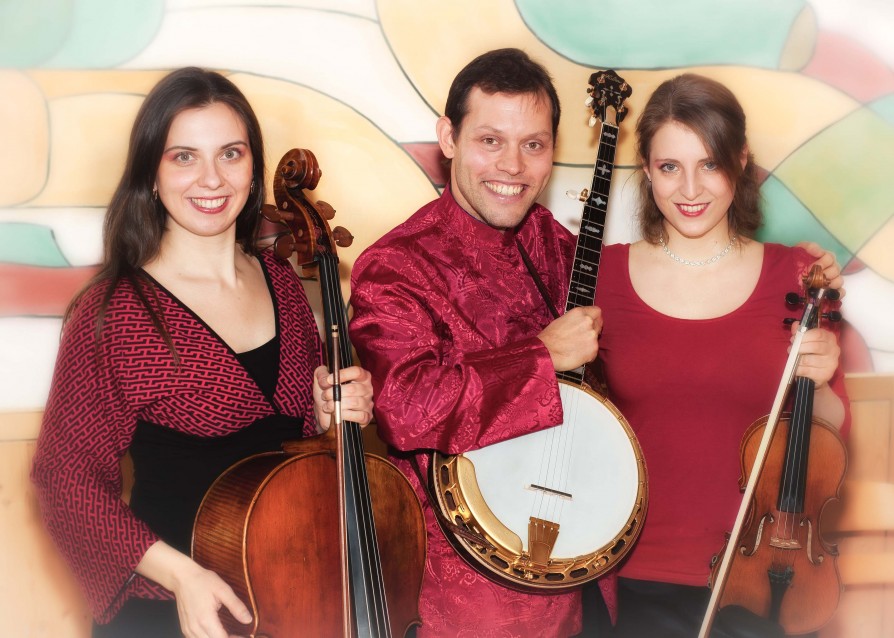
Trio Violanjo
To our great enjoyment, the Trio Violanjo consists of three brilliant young musicians whose style and repertoire cannot fail to entertain and inspire. The program that day consisted of pieces by Nash (“I Can See Clearly Now”), McCartney (“Eleanor Rigby”), Bach, Mozart, Joplin, and others, including compositions by the banjo picker himself, Manuel Stocks. Each song was a pleasure to hear, with excellent harmonies, ensemble, and chord progressions. The banjo itself was reminiscent at times of a harpsichord, so the overall impression ranged from solid Classical to Celtic to Bluegrass. For this American in the audience it was a perfect blend of Old and New worlds.
Be sure to watch for these performers: Manuel Stocks, Tanja Kronheim, and Rita Mascaros. Several of their pieces are available on YouTube. They cannot fail to please the ear. Learn more about them on their respective Facebook pages, as well as the group’s website, https://violanjo.wordpress.com/trio-violanjo/
It had been several years since last we ate at Mama Stortini’s, an Italian restaurant on the border of Puyallup and Sumner, Washington. It is a very good restaurant with a great menu, though we were a little disappointed to find the entree Sampler Platter no longer available (there is a sampler of appetizers); it was a large dish and one suspects it was not cost effective. We also noted the menu includes a number of non-Italian items now, including hamburgers and other sandwiches, no doubt a competitive necessity.
No matter, the individual entrees are delicious. I had one of my favorites, chicken marsala on a bed of risotto and mushrooms. It could have had a little more sauce, but the flavor was just right. Other members of our party enjoyed lasagna (one of Mama’s best items), lobster macaroni and cheese, and seafood fettucini in white sauce. Our appetizer was the cheese bread with housemade tomato feta relish–a great choice which could have made a whole meal. The dessert menu includes cobbler, ice cream sundaes, the obligatory tiramisu, and other delights. We had spumoni, a chocolate sundae, and an exquisite little individual “Italian Style” cheesecake.
Service was excellent–there was no waiting–and the dining room is comfortable, not over-crowded the way so many restaurants are. Overall, a very satisfactory night out. If you are in the Puyallup/Sumner area, consider Mama’s next time you are in the mood for Italian. Additional locations are in Kent and Northgate (Seattle).
Although I have spent most of my life in the Pacific Northwest, and much of that in Washington state, this past week was my first visit to the little coastal resort called Ocean Shores. It is situated just northwest of Gray’s Harbor, a sharkbite shaped bay along the middle of Washington’s Pacific coast. Besides being known for its clams and crabs, the bay is home of Aberdeen, a rough and tumble timber port called the “Gateway to the Olympic Peninsula”. Ocean Shores is a pleasant town tucked into the coastal woods of one of the peninsulas that define the outer boundary of the bay.
We stayed at a condo/resort/hotel called The Canterbury Inn. Facilities were clean, tidy, and very pleasant, with open views of the beach about a quarter mile away. Although there were some spectacular blue skies and beautiful clouds, days were mostly overcast, cool, and intermittently breezy, comfortable for us humans who are not very heat tolerant, but brisk for Mitzi, the Havanese puppy we brought with us. She spent much of her time being held and sheltered from the elements.
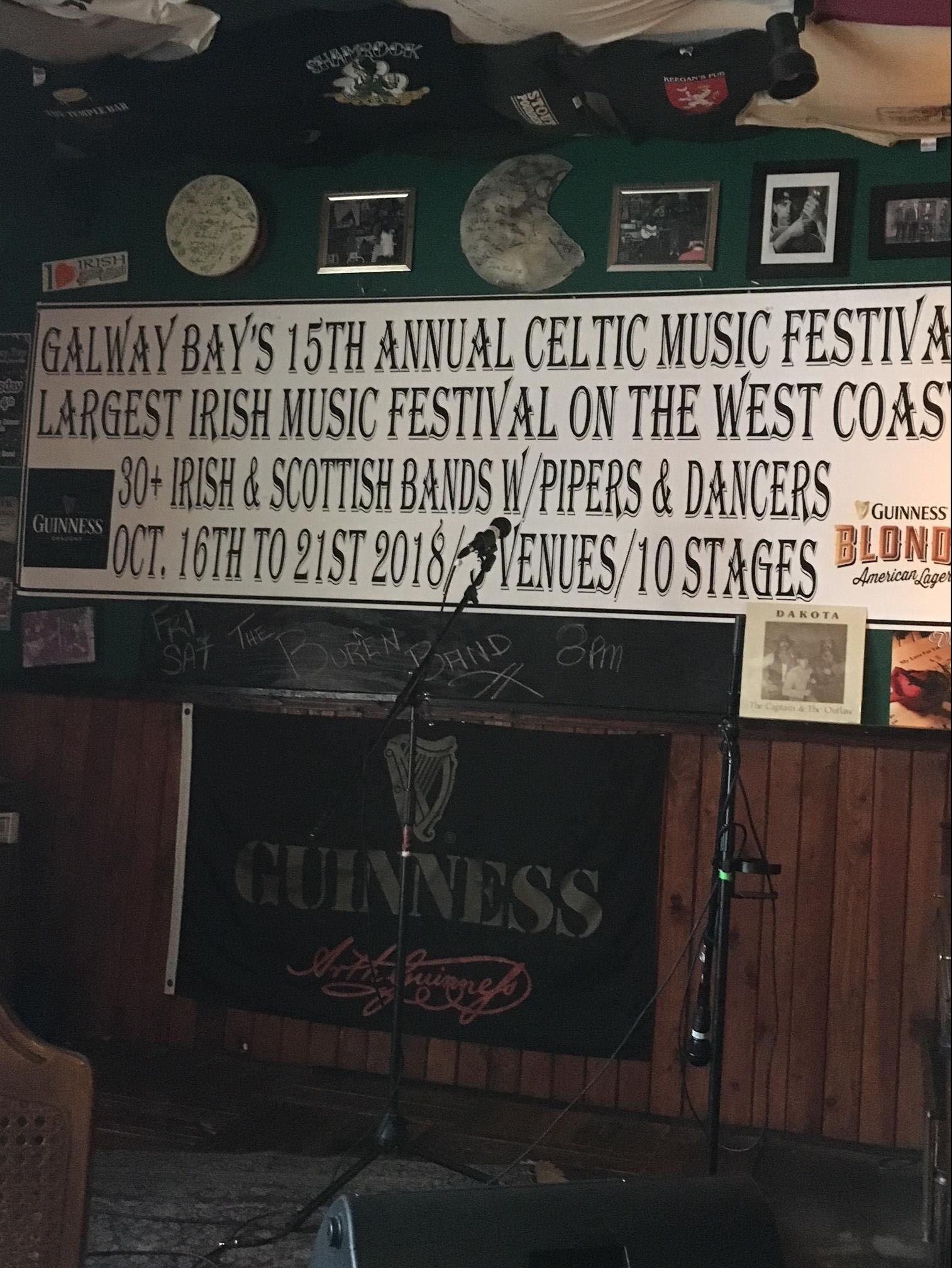
Besides the usual assortment of generally good seafood restaurants, Ocean Shores is home to Galway Bay, an Irish restaurant, pub, and gift shop, well worth the visiting. Their fish and chips was outstanding, cooked with a good beer batter rather than the light coatings currently the fad in the Seattle area. Their soda bread is excellent, comfort food at its best, and the perfect accompaniment to their clam chowder. Another dish we tried is called Forfar Bridie, a Scottish dish invented by a Forfar baker in the 1850’s, described in the menu as “beef and lamb slowly braised in white wine, flavored just right with sautéed onions, carrots, potatoes, garlic and herbs. Then baked in a puff pastry and covered with our famous Whiskey Cream Sauce.” It reminded me of a sort of partially disassembled shepherd’s pie on a plate, and, aye, it is “flavored just right.”
We will certainly return to Ocean Shores, about two hours west of Olympia, and definitely return to Galway Bay. They will be hosting, incidentally, their 15th Annual Celtic Music Festival October 16-21, 2018. We can hardly wait.
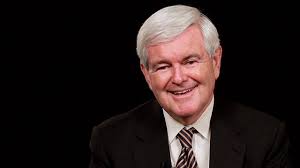
In 1993 Newt Gingrich produced a wonderful video course called Renewing American Civilization. My wife and I had the privilege to serve as local representatives of the course, persuading two local public TV stations to broadcast it (one of them re-broadcast it six times). We felt this was quite an accomplishment, especially in liberal Portland, Oregon. The course is still available from Amazon and well worth reviewing:
Now Professor Gingrich has created a new online course, Defending America. I have not worked through the course yet, but it promises to be a thoughtful, timely, and useful update on the state of our beloved country, the “culture wars”, and how best to preserve all that is true, good, and beautiful in our civilization. The six lessons are titled “Poisoning The Melting Pot”, “Faith Under Attack”, “Destruction of Opportunity”, “Thought Police Run Amok”, “Defending the 2nd Amendment”, and “Draining the Swamp”. The titles alone say, “This is going to be good!” Find out more here:
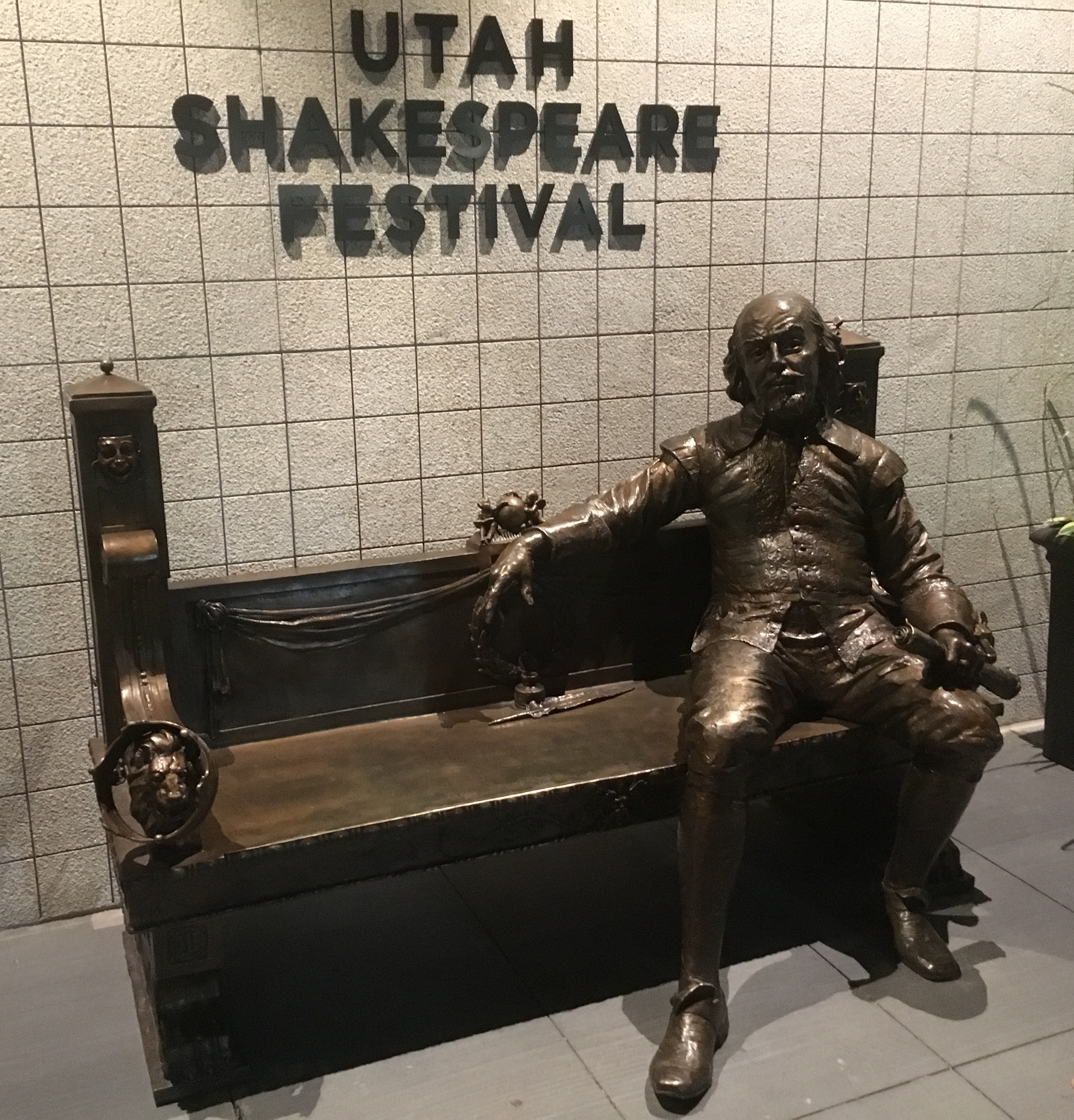
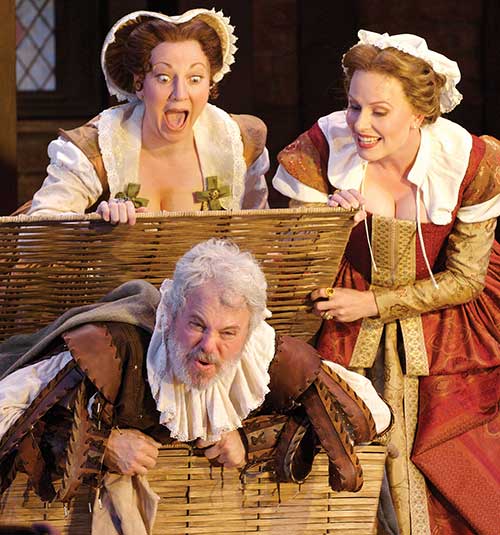
Another great season of theater in southern Utah is approaching. Offerings this year include perennial favorites The Merchant of Venice and The Merry Wives of Windsor as well as Henry VI Part One and Othello. No doubt the latter will be great; I, alas, cannot go to it. Othello for me is too tragic, Iago too evil, the pathos too deep. It is, as it were, a tear too far for me. The others, though, “Bravo!” in advance, especially The Merry Wives, a downright rollicking play.
Other offerings include Roger Miller’s Big River, a musical depiction of Huckleberry Finn; The Foreigner, about a visitor who pretends to not speak English and so overhears what he shouldn’t (reminiscent of What The Deaf Man Heard); The Liar, about a master who cannot tell the truth and a servant who cannot lie (oh, the possibilities!); An Iliad, about, well that’s obvious; and Pearl’s In The House, a musical about the great Pearl Bailey.
The award-winning Utah Shakespeare Festival is reliably excellent, so start making plans now for a week, or long weekend, of great theater starting June 28 and lasting through September 8, with an abbreviated Fall schedule from September 11 through October 13. Please visit the following site for more details and to reserve your tickets:
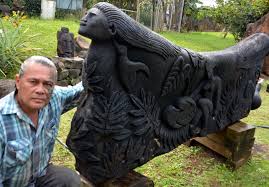
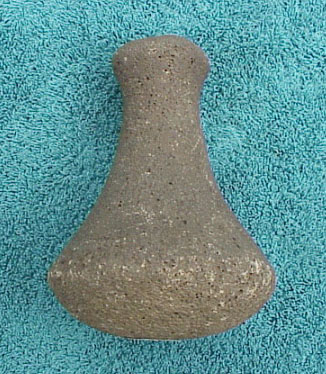
The interaction of great artists with their chosen medium is the stuff of lore and not a little mystical. Michelangelo spoke of seeing the figure in a block and carving away stone to free it. Similarly, Hawaiian artist Hoaka Delos Reyes is quoted as saying about his learning of the craft, “The stone started to shape me, not the other way around.” It all started many years ago when his son asked him to make a stone poi pounder for him, an easy request for a man who was a builder in stone and cement. Then came the condition, his son wanted it to be genuine, made the old way, no modern tools. What followed is related in the article, “The Stone Caller” by Shannon Wianecki in the February/March issue of Hana Hou!, the inflight magazine of Hawaiian Airlines.
It is the story of a man responding to a calling, for Hoaka soon found there was only one man who knew the old way of working stone, George Fujinaga, a crusty old stone carver who looked askance at young men who naively wished to learn the art in a weekend. It proved to be a schooling of many years. That meant learning the types of stones, learning to recognize their spirits, learning how to work them and with them, how to “listen to them”, how to call to them and hear their answer. In the process the artist comes to know himself as well.
The day came when the apprentice’s skill exceeded his master’s. Not long after that, George passed away, but not before asking his wife to tell Hoaka that “he had been waiting for you all his life. Now he can go to sleep, knowing that you will carry on the work.” It is an inspiring story of diligence, faith, and hard work. Read more at the following links:





 Grow, Heal, Improve